

Partition Fractions of Dialium guineense Fruits and Leaves Inhibits AGEs and DPPH-radical formation: An In vitro - Computational Study
Article Sidebar
Main Article Content
Abstract
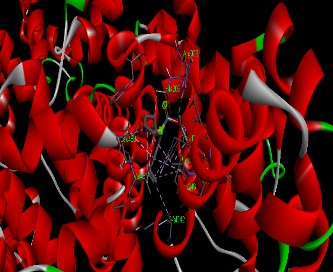
Non-enzymatic reaction between proteins and reducing sugars (glycation) results in production of advanced glycation end products (AGEs), leading to build up and cellular injuries via lipid peroxidation, endothelial dysfunction and protein structural alterations. Anti-glycation phytoconstituents seems promising for addressing human aging and emergence of many disorders. This study aimed to explore antioxidative and antiglycation effects of Dialium guineense (DG), a plant commonly known for its medicinal properties. Partition fractions from both fruits and leaves of this plant were utilized, focusing on their ability to inhibit Advanced Glycation End-products (AGEs) formation and scavenge DPPH radicals, utilizing both in vitro experimental assays and in silico molecular docking techniques. Antioxidant activity revealed DPPH scavenging capacity of 94% for ethylacetate fruit fraction and 85% for ethylacetate leaf fraction. A similar trend was observed for antiglycation results. Ethylacetate fruit fraction showed significant efficacy (95%) against glycated bovine serum albumin (BSA) when compared to the control (aminoguanidine). The leaf chloroform fraction displayed a lower (73%) effectiveness overall. Both fractions inhibited AGE formation in BSA-Glucose model. Molecular docking analyses revealed strong binding affinities of -6.4 and - 6.1 kcal/mol, involving a non-polar interaction with Arg185 residue respectively; which is highly susceptible to glycation. Carbonic acid and Oxalic acid exhibited one polar contact each, involving two residues (Arg-208 and Arg-144). Hence, compounds in fruit ethylacetate fraction had higher binding affinity for BSA, which correlated with superior anti-oxidant and anti-glycation activity. These findings suggest that the bioactive compounds from D. guineense have therapeutic potential in combating various diseases.
Article Details

This work is licensed under a Creative Commons Attribution-NonCommercial 4.0 International License.
References
1. Perez-Burillo S, Rufián-Henares JÁ, Pastoriza S. Effect of home cooking on the antioxidant capacity of vegetables: Relationship with Maillard reaction indicators. Food Res. Int. 2019 Jul 1;121:514-23. https://doi.org/10.1016/j.foodres.2018.12.007
2. Van Nguyen C. Toxicity of the AGEs generated from the Maillard reaction: On the relationship of food‐AGEs and biological‐AGEs. Mol. Nutr. Food Res. 2006 ;50(12):1140-9. https://doi.org/10.1002/mnfr.200600144
3. Reddy VP, Beyaz A. Inhibitors of the Maillard reaction and AGE breakers as therapeutics for multiple diseases. Drug discov. today. 2006;11(13-14):646-54. DOI: 10.1016/j.drudis.2006.05.016
4. Fishman SL, Sonmez H, Basman C, Singh V, Poretsky L. The role of advanced glycation end-products in the development of coronary artery disease in patients with and without diabetes mellitus: a review. Mol. Med. 2018 ;24(1):1-59. DOI: 10.1186/s10020-018-0060-3
5. Ahmed N. Advanced glycation endproducts—role in pathology of diabetic complications. Diabetes Res. Clin. Pract. 2005 ;67(1):3-21. DOI: 10.1016/j.diabres.2004.09.004
6. Indyk D, Bronowicka-Szydełko A, Gamian A, Kuzan A. Advanced glycation end products and their receptors in serum of patients with type 2 diabetes. Sci. Rep. 2021 24;11(1):13264. https://doi.org/10.1038/s41598-021-92630-0
7. Goh SY, Cooper ME. The role of advanced glycation end products in progression and complications of diabetes. J. Clin. Endocrinol. Metab. 2008 ;93(4):1143-52. DOI: 10.1210/jc.2007-1817
8. Yim MB, Yim HS, Lee C, Kang SO, Chock PB. Protein glycation: creation of catalytic sites for free radical generation. Ann. N. Y. Acad. Sci. 2001;928(1):48-53. https://pubmed.ncbi.nlm.nih.gov/11795527/
9. Peppa M, Vlassara H. Advanced glycation end products and diabetic complications: a general overview. Hormones. 2005;4(1):28-37. DOI: 10.14310/horm.2002.11140
10. Singh RB, Barden A, Mori T, Beilin L. Advanced glycation end-products: a review. Diabetologia. 2001 ;44(2):129-46. DOI: 10.1007/s001250051591
11. Chaudhuri J, Bains Y, Guha S, Kahn A, Hall D, Bose N, Gugliucci A, Kapahi P. The role of advanced glycation end products in aging and metabolic diseases: bridging association and causality. Cell Met. 2018 ;28(3):337-52. DOI: 10.1016/j.cmet.2018.08.014
12. Asadipooya K, Uy EM. Advanced glycation end products (AGEs), receptor for AGEs, diabetes, and bone: review of the literature. J. Endocr. Soc. 2019 ;3(10):1799-818. DOI: 10.1210/js.2019-00160
13. Garay-Sevilla ME, Rojas A, Portero-Otin M, Uribarri J. Dietary AGEs as exogenous boosters of inflammation. Nutrients. 2021;13(8):2802. https://doi.org/10.3390/nu13082802
14. Snelson M, Coughlan MT. Dietary advanced glycation end products: digestion, metabolism and modulation of gut microbial ecology. Nutrients. 2019 ;11(2):2-15. https://doi.org/10.3390/nu11020215
15. Uribarri J, Woodruff S, Goodman S, Cai W, Chen XU, Pyzik R, Yong A, Striker GE, Vlassara H. Advanced glycation end products in foods and a practical guide to their reduction in the diet. J. Am. Diet. Assoc. 2010 ;110(6):911-916. https://doi.org/10.3390/ijerph18147236
16. Baliyan S, Mukherjee R, Priyadarshini A, Vibhuti A, Gupta A, Pandey RP, Chang CM. Determination of antioxidants by DPPH radical scavenging activity and quantitative phytochemical analysis of Ficus religiosa. Molecules. 2022 ;27(4):1326. https://doi.org/10.3390/molecules27041326
17. Chan Y, Ng SW, Tan JZ, Gupta G, Negi P, Thangavelu L, Balusamy SR, Perumalsamy H, Yap WH, Singh SK, Caruso V. Natural products in the management of obesity: Fundamental mechanisms and pharmacotherapy. S. Afr. J. Bot. 2021 ;143:176-97. https://doi.org/10.1016/j.sajb.2021.07.026
18. Muhammad A, Chukwuma CI, Erukainure OL, Islam MS. Therapeutic potential of natural products in oxidative and metabolic diseases. Front. Pharmacol. 2024 ;15:1375788. https://doi.org/10.3389/fphar.2024.1375788
19. Mallik S, Paria B, Firdous SM, Ghazzawy HS, Alqahtani NK, He Y, Li X, Gouda MM. The positive implication of natural antioxidants on oxidative stress-mediated diabetes mellitus complications. J. Genet. Eng. Biotechnol. 2024 ;22(4):100424. DOI: 10.1016/j.jgeb.2024.100424
20. Achoba II, Lori JA, Elegbede JA, Kagbu JA. Nutrient composition of black (African) velvet tamarind (Dialium guineense Wild) seed and pulp from Nigeria. J. Food Biochem. 1992 ;16(4):229-33. DOI:10.1111/J.1745-4514.1992.TB00448.X
21. Besong EE, Balogun ME, Djobissie SF, Obu DC, Obimma JN. Medicinal and economic value of Dialium guineense. Afr. J. Biomed. Res.. 2016 ;19(3):163-70. DOI: https://doi.org/10.4314/
22. Princewill O. I, Modisaojang-Mojanaga MM, Mokolopi BG, Mbajiorgu CA. Nutritional and chemical composition of black velvet tamarind (Dialium guineense Willd) and its influence on animal production: A review. Open Agriculture. 2023;8(1). DOI:10.1515/opag-2022-0174
23. Osuagwu GG, Eme CF. The phytochemical composition and antimicrobial activity of Dialium guineense, Vitex doniana and Dennettia tripetala leaves. Asian J Nat Appl Sci. 2013 ;2(3):69-81. https://api.semanticscholar.org/CorpusID:67824786
24. Ajiboye AE, Ameen MT, Adedayo MR. Antimicrobial activity and phytochemical screening of the fruit pulp of Dialium guineense (Velvet Tamarind) on some microbial isolates. J. Microbiol. Antimicrob. 2015;7(4):33-41. DOI:10.5897/JMA2014.0332
25. Rajbir Kaur RK, Saroj Arora SA, Bikram Singh BS. Antioxidant activity of the phenol rich fractions of leaves of Chukrasia tabularis A. Juss. Biores. Tech. 99(16):7692–7698. DOI: 10.1016/j.biortech.2008.01.070
26. Othman AR, Abdullah N, Ahmad S, Ismail IS, Zakaria MP. Elucidation of in-vitro anti-inflammatory bioactive compounds isolated from Jatropha curcas L. plant root. BMC Complement. Altern. Med. 2015 ;15(1):11. DOI: 10.1186/s12906-015-0528-4
27. Shah NA, Khan MR, Ahmad B, Noureen F, Rashid U, Khan RA. Investigation on flavonoid composition and anti free radical potential of Sida cordata. BMC Complement. Altern. Med. 2013 ;13(1):276. DOI: 10.1186/1472-6882-13-276
28. Matsuura N, Aradate T, Sasaki C, Kojima H, Ohara M, Hasegawa J, Ubukata M. Screening system for the Maillard reaction inhibitor from natural product extracts. J. Health Sci. 2002;48(6):520-6. https://doi.org/10.1248/jhs.48.520
29. Kaewnarin K, Niamsup H, Shank L, Rakariyatham N. Antioxidant and antiglycation activities of some edible and medicinal plants. Chiang Mai J. Sci. 2014 Jan 1;41(1):105-16. https://api.semanticscholar.org/CorpusID:53481340
30. Mocan A, Zengin G, Uysal A, Gunes E, Mollica A, Degirmenci NS, Alpsoy L, Aktumsek A. Biological and chemical insights of Morina persica L.: A source of bioactive compounds with multifunctional properties. is J. Funct. Foods. 2016 ;25:94-109. DOI:10.1016/J.JFF.2016.05.010
31. Emendato A, Milordini G, Zacco E, Sicorello A, Dal Piaz F, Guerrini R, Thorogate R, Picone D, Pastore A. Glycation affects fibril formation of Aβ peptides. J. Biol. Chem. 2018 ;293(34):13100-11. DOI: 10.1074/jbc.RA118.002275
32. Adopo SS, Kabran GR, Baguia-Broune FD, Konan KA, Mamyrbekova-Bekro JA, Békro YA. Chemical Composition and Antioxidant Activity of Dialium guineense Fruit (Fabaceae), Côte d'Ivoire. Int. J. Biochem. Res. Rev. 2024 ;33(6):604-15. https://doi.10.9734/ijbcrr/2024/v33i6940
33. Usman HS, Hassan SM, Sadiq IZ, Olawoyin CO, Danja M I, & Sallau AB. Pilot Evaluation of Dialium guineense Fruit and Leaf Extracts in Inhibition of Glucose-Induced Protein Glycation and DPPH Radical: An In vitro Study. 2026. UMYU Sci, 5(2), 285 – 292. https://doi.org/10.56919/usci.2652.009
34. Song Q, Liu J, Dong L, Wang X, Zhang X. Novel advances in inhibiting advanced glycation end product formation using natural compounds. Biomed. Pharmacother. 2021 ;140:111750. https://doi.org/10.1016/j.biopha.2021.111750
35. Starowicz M, Zieliński H. Inhibition of advanced glycation end-product formation by high antioxidant-leveled spices commonly used in European cuisine. Antioxidants. 2019 ;8(4):100. https://doi.org/10.3390/antiox8040100
36. Ramkissoon JS, Mahomoodally MF, Ahmed N, Subratty AH. Antioxidant and anti–glycation activities correlates with phenolic composition of tropical medicinal herbs. Asian Pac. J. Trop. Med. 2013 ;6(7):561-9. https://doi.org/10.1016/S1995-7645(13)60097-8
37. Erharuyi O, Azubuike CC. HPLC Analysis, In Vitro and In Silico Evaluation of Antioxidant Activity of Methanol Stem Bark Extract of Picralima nitida (Apocynaceae). Trop. J. Phytochem. Pharm. Sci. 2025 ;4(5):230-42. https://doi.org/10.26538/tjpps/v4i5.6
38. Enenebeaku UE, Duru CE, Mgbemena IC, Ukwandu NC, Nwigwe HC, Enenebeaku CK, Okotcha EN. Phytochemical evaluation and molecular docking of bioactive compounds from the roots of Dictyandra arborescens (Welw.) against Plasmodium berghei protein targets. Trop. J. Nat. Prod. Res. 370-381 https://tjnpr.org/index.php/home/article/view/792
39. Aparna V, Dileep KV, Mandal PK, Karthe P, Sadasivan C, Haridas M. Anti‐inflammatory property of n‐hexadecanoic acid: structural evidence and kinetic assessment. Chem. Biol. Drug Des. 2012 ;80(3):434-9. https://doi.org/10.1111/j.1747-0285.2012.01418.x
40. Ganesan T, Subban M, Christopher Leslee DB, Kuppannan SB, Seedevi P. Structural characterization of n-hexadecanoic acid from the leaves of Ipomoea eriocarpa and its antioxidant and antibacterial activities. Biomass Convers. Biorefin. 2024 ;14(13):14547-58. DOI 10.1007/s13399-022-03576-w
41. Choi D, Kang W, Park T. Anti-allergic and anti-inflammatory effects of undecane on mast cells and keratinocytes. Molecules. 2020 ;25(7):1554. https://doi.org/10.3390/molecules25071554
42. Oladimeji OH, Onu NO, Attih EE. Ethyl linalool and diethyl phthalate from Pycnanthus angolensis (Welw.) Warb. Afr. J. Pharmacol. Ther.. 2017;6(2). DOI: 10.17628/ecb.2017.6.76-78
43. Jepkorir AK, Irungu CM, Kendagor PB. Chemical composition of Azadirachta indica A. Juss and Ricinus communis Linn. seed oils growing in Marigat, Baringo County, Kenya. East Afr. J. Sci. Technol. Innov. 2020;1(2). https://doi.org/10.37425/eajsti.1.2.88
44. Rajeswari G, Murugan M, Mohan VR. GC-MS analysis of bioactive components of Hugonia mystax L.(Linaceae). (RJPBCS), 29(29):818-824. https://api.semanticscholar.org/CorpusID:86344000
45. Tyagi T, Agarwal M. Phytochemical screening and GC-MS analysis of bioactive constituents in the ethanolic extract of Pistia stratiotes L. and Eichhornia crassipes (Mart.) solms. J. Pharmacogn. Phytochem. 2017;6(1):195-206. https://www.phytojournal.com/archives/2017/vol6issue1/PartC/6-1-11-956.pdf
46. Duke JA. Dr. Duke's phytochemical and ethnobotanical databases. Ag DataCommons. Dataset. https://doi.org/10.15482/USDA.ADC/1239279
47. Gloriozova TA, Dembitsky VM. The impact factor of the thiirane group in organic compounds on their predicted pharmacological activities: A brief review. Int. J. Chem. Stud. 2018;6(1):832-9. https://www.chemijournal.com/archives/2018/vol6issue1/PartL/5-6-371-108.pdf
48. Pathania S, Narang RK, Rawal RK. Role of sulphur-heterocycles in medicinal chemistry: An update. Eur. J. Med. Chem. 2019; 180:486-508. https://doi.org/10.1016/j.ejmech.2019.07.043
49. Overall CM, Kleifeld O. Towards third generation matrix metalloproteinase inhibitors for cancer therapy. Br. J. Cancer. 2006 ;94(7):941-6. DOI: 10.1038/sj.bjc.6603043
50. Lee M, Hesek D, Shi Q, Noll BC, Fisher JF, Chang M, Mobashery S. Conformational analyses of thiirane-based gelatinase inhibitors. Bioorg. Med. Chem. Lett. 2008 ;18(10):3064-7. DOI: 10.1016/j.bmcl.2007.11.131
51. Fernández D, Boix E, Pallarès I, Avilés FX, Vendrell J. Structural and functional analysis of the complex between citrate and the zinc peptidase carboxypeptidase A. Enz. Res. 2011;2011(1):128676. doi: 10.4061/2011/128676
52. Testero SA, Llarrull LI, Fisher JF, Chang M, Mobashery S. Exploring the functional space of thiiranes as gelatinase inhibitors using click chemistry. ARKIVOC: J. Org. Chem. 2011;2011(7):221. DOI: 10.3998/ark.5550190.0012.719
53. Stolte WC, Öhrwall G. Sulfur K-edge photofragmentation of ethylene sulfide. J. Chem. Phys. 2010 ;133(1). doi:10.1063/1.3457946
54. Asif M. Biological overview on thiirane derivatives. SOP Trans. Appl. Chem. 2014 ;1(1):1-0. DOI:10.15764/STAC.2014.01001
55. Aljamali NM. Synthesis and reactions of various memered rings. Asian J. Research Chem. 2014;7(9):810-38.
56. Repetto E, Manzano VE, Varela O, Laura Uhrig M. Synthesis and Reactivity of Carbohydrates Containing 3‐Membered Heterocycles, Key Precursors of Modified Sugars and Mimetics. Eur. J. Org. Chem. 2024; 27(38):e202400488. https://doi.org/10.1002/ejoc.202400488
57. Bujacz A. Structures of bovine, equine and leporine serum albumin. Biol. Crystallog. 2012 ;68(10):1278-89. DOI: 10.1107/S0907444912027047
58. Anguizola J, Matsuda R, Barnaby OS, Hoy KS, Wa C, DeBolt E, Koke M, Hage DS. Glycation of human serum albumin. Clinica Chimica Acta. 2013; 425:64-76. DOI: 10.1016/j.cca.2013.07.013
59. Purnamasari V, Estiasih T, Sujuti H, Widjanarko SB. Identification of phenolic acids of Pandan anggur (Sararanga sinuosa Hemsley) fruits and their potential antiglycation through molecular docking study. J. Appl. Pharm. Sci. 2021;11(2):126-34. DOI: 10.7324/JAPS.2021.110216
60. Usman HS, Umar UA, Audu F, Suleiman MA, Yakubu A, Sallau AB. Bioassay Guided Evaluation and Characterization of Solanum macrocarpon Fruits and Leaf Fractions via In Vitro Antiglycation, Radical Scavenging and Molecular Docking Analyses. Nig. J. Biochem. Mol. Biol. 2025 ;40(1):40-7. https://www.nsbmb.org.ng/journals/index.php/njbmb/article/view/601